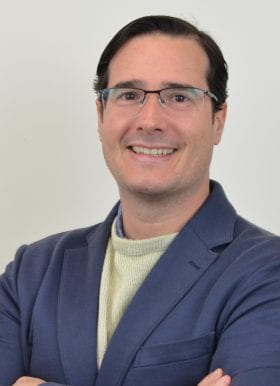
Carlos Cruchaga, PhD
Director, NeuroGenomics and Informatics Center
- Phone: 314-286-0546
- Fax: 314-362-2244
- Email: cruchagac@wustl.edu
Dr. Cruchaga is the Barbara Burton & Reuben Morriss III Professor of Psychiatry with joint appointments at Genetics, and Neurology at Washington University School of Medicine.
Dr. Cruchaga is a human genomicist with expertise in multiomics, informatics, and neurodegeneration. He completed his PhD in Biochemistry and Molecular Biology in 2005 at the University of Navarra in Spain. During his first postdoc with Dr. Pastor he conducted statistical human genetics studies focused on Alzheimer’s disease (AD) and Parkinson’s disease (PD). He then moved to Dr. Goate’s Lab to complete his training in quantitative human genomics. Dr. Cruchaga established his laboratory at Washington University in 2011 to study the genetic architecture of neurodegenerative diseases. His interests are focused on using human genomic and other -omic data (proteomics, metabolomics, and lipidomics) to identify and understand the biological processes that lead to AD, PD, frontotemporal dementia, and other neurodegenerative processes. He is the founding director of the NeuroGenomics and Informatics Center at Washington University.
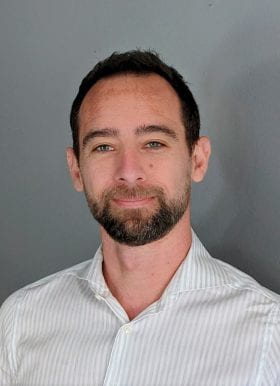
Cyril Pottier, PhD
Asst Prof of Neurology (PEFA), Neurology – Administration
- Phone: 314-747-2601
- Email: cpottier@wustl.edu
Cyril Pottier obtained his Ph.D. focused on the genetics of genetically unexplained young-onset Alzheimer’s disease (YOAD) in the laboratory of Dr. Campion in University of Rouen, France. His major contribution to the AD field was the identification of SORL1 as a potential causal gene for YOAD, publishing the first whole-exome study on YOAD patients. During his postdoctoral stay at Mayo Clinic Jacksonville, Florida within Dr. Rademakers laboratory, he discovered new risk factors, genetic modifiers and transcript alterations associated with frontotemporal lobar degeneration.
As Assistant Professor at Washington University, he is now focusing his work on identifying new genetic risk factors and modifiers of early onset dementia using integrative and innovative approaches. He has a strong interest in disease modifiers in patients with PSEN1 mutations and is currently combining whole genome sequencing with short and long read single-nuclei RNA sequencing to address the variable disease presentation problematic. He is leveraging a large set of whole genome sequencing data of neuropathologically confirmed as well as highly characterized clinical genetically unexplained YOAD patients to discover new risk genes, and variants that modify disease onset and other associated neuropathologic features.

Dario Maschi, PhD
Assistant Professor of Psychiatry
- Email: dario.maschi@wustl.edu
Dr. Maschi, a neurobiologist, combines his passion for understanding synaptic transmission with advanced biophysical techniques. His research primarily focuses on the mechanisms of synaptic function and dysfunction in healthy and diseased states, spanning molecular, cellular, and circuit levels.
Dr. Maschi completed his B.S. and Ph.D. in Neuroscience at the University of Buenos Aires, supported by a National Council for Scientific and Technological Research fellowship. His doctoral work focused on RNA-binding proteins and their role in synaptic plasticity. He used Deconvolution Microscopy for 3D reconstruction of dendritic spines and developed computational tools for their analysis.
Dr. Maschi joined Washington University for his postdoctoral training, supported by a McDonnell Center for Cellular & Molecular Neurobiology fellowship. He developed a computationally intensive nanoscale microscopy technique that precisely locates single vesicle fusion events at synaptic active zones. This technique has enabled groundbreaking insights into synaptic transmission mechanisms, revealing the complex dynamics of neurotransmitter release. In addition, Dr. Maschi applies custom-trained deep learning models to study the structural aspects of neurons through electron microscopy, contributing to the structural recognition and classification of data sets.
Currently, as an Assistant Professor of Psychiatry, Dr. Maschi remains committed to advancing our understanding of neurodegenerative diseases and leads innovative research in synaptic physiology to explore early synaptic changes that could trigger neuropathologies, including Alzheimer’s disease.

Miguel Minaya, PhD
Assistant Professor of Psychiatry
- Email: miguel.minaya@wustl.edu
Miguel Minaya, PhD, is an Assistant Professor of Psychiatry at Washington University in St. Louis. His research combines stem cell modeling and functional genomics to unravel the molecular mechanisms underlying tauopathies, including Alzheimer’s disease and frontotemporal dementia. By integrating CRISPR-engineered stem cell models with transcriptomic data from postmortem human brains across diverse populations and mouse models of tauopathy, his work aims to identify both shared and ancestry-specific molecular signatures of neurodegeneration. His research has highlighted protein-coding genes (such as CALB1 and SALL1) and long non-coding RNAs (including SNHG8 and FAM151B-DT) as key contributors to tau pathology, offering new insights and potential therapeutic targets.
Dr. Minaya earned his PhD in Molecular Biology from the Universidad de Zaragoza, Spain, and completed postdoctoral training in virology and neurogenomics at Saint Louis University and Washington University. He currently leads an NIH K01-funded program integrating human brain data with genetically diverse stem cell models to explore the molecular landscape of neurodegeneration. Beyond the bench, he is deeply committed to mentoring the next generation of scientists and believes that good science, like a well-run experiment, thrives on curiosity, rigor, and teamwork.

Muhammad Ali, PhD
Assistant Professor in Psychiatry
- Email: m.ali@wustl.edu
Dr. Muhammad Ali is an Assistant Professor in the Department of Psychiatry at Washington University School of Medicine in St. Louis (WashU). His research focuses on identifying biomarkers and therapeutic targets for neurodegenerative diseases, including Alzheimer’s disease (AD), Parkinson’s disease (PD), dementia with Lewy bodies (DLB), and frontotemporal dementia (FTD). His work leverages large-scale, multi-platform proteomic datasets to uncover disease-specific and shared molecular signatures across tissues (cerebrospinal fluid and plasma) and disease stages.
Dr. Ali previously completed his postdoctoral training in the Cruchaga Lab at WashU, where he led and contributed to multiple genome-wide association studies (GWAS) and multi-omics projects aimed at understanding the genetic architecture of neurodegeneration. Trained as a bioinformatician during his doctoral studies at the University of Luxembourg and Maastricht University in the Netherlands, his broader expertise lies in computational systems biology, including integrative analysis of multi-omics data and network-based disease modeling. His long-term goal is to bridge high-dimensional molecular data with clinical phenotypes to enhance disease diagnostics and identify actionable biological targets.